
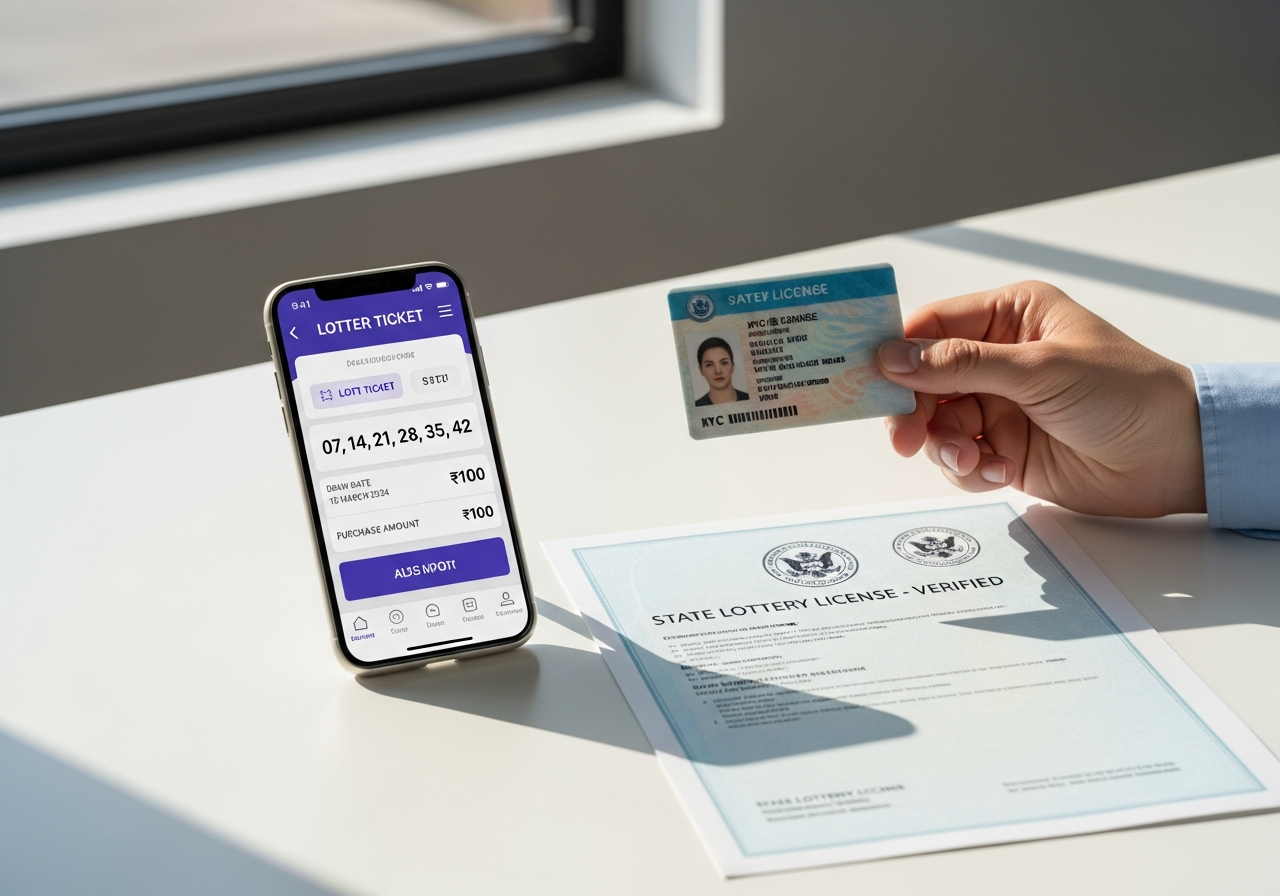
Playing online lottery games in India requires understanding a complex legal landscape shaped by state-level regulations, central laws, and the nature of the lottery operator. Unlike many countries with a unified national framework, India’s lottery rules vary significantly by state, and the move from paper tickets to digital platforms has created ambiguity that users must navigate carefully. This guide separates legal categories—state-authorised lotteries, conditional participation options, and high-risk scenarios—so you can make an informed decision before registering or depositing money.
The core issue is simple: not all online lottery platforms are legal in India, and legality depends on three factors: (1) whether your state permits lotteries, (2) whether the operator holds state authorisation or a licence, and (3) whether the payment and draw mechanisms comply with Indian banking and gambling law. This guide walks you through how to verify each factor and play safely within the legal boundaries of your jurisdiction.
Is Online Lottery Legal in India?
The short answer is: it depends on your state, the operator, and the specific lottery product. India does not have a single national lottery law for online play. Instead, the Lotteries (Regulation) Act, 1998, and the Lottery (Regulation) Rules, 2010, give individual states the power to permit, regulate, or prohibit lottery sales—including online sales. This means a platform that is perfectly legal in one state may be prohibited in another.
The following table outlines the main lottery categories and their legal status:
| Lottery type | Legal status | Who can run it | Key risk |
|---|---|---|---|
| State-run paper lottery (e.g., Kerala, West Bengal) | Legal in permitted states | State government or state-authorised agent | Varies by state; some states prohibit online sales of the same lottery |
| State-authorised online lottery | Legal (if state permits) | State lottery department or licensed operator under state rules | Platform must hold valid state authorisation; buyer must be in permitted state |
| Private/unauthorised online lottery | Illegal | None (private operators lack permission) | Fraud, fund seizure, legal liability |
| International lottery tickets purchased from India | Legally ambiguous | Foreign lottery operators | Remittance/FEMA compliance unclear; foreign jurisdiction complicates claim and tax treatment |
| Lottery-like online games (skill-based, raffles) | Varies by state | Varies (some states allow skill games; others don’t) | State classification of “game” vs “lottery” affects legality |
Central Law and State Power
The Lotteries (Regulation) Act, 1998, is India’s primary central legislation governing lotteries. However, the Act does not outlaw lotteries; instead, it empowers state governments to permit and regulate lotteries within their borders. Each state can decide whether to run its own lottery, permit private lotteries under licence, or prohibit lotteries entirely.
This decentralised model means that legality is not uniform across India. Some states, such as Kerala, Goa, and West Bengal, have long-running, well-established state lotteries and permit online sales through authorised platforms. Other states allow lotteries under strict conditions, while some prohibit them outright. The rules can also change; states may introduce new regulations, restrict online sales, or amend eligibility criteria without notice.
For online purchases specifically, state law often distinguishes between buying a paper ticket online (delivery to your home) and buying an entry into an online-only draw. The distinction matters because some states permit one but not the other. Your first step is always to confirm what your state permits.
Why Online Sales Need Extra Care
Simply because a lottery is sold online does not make it legal. Online purchasing introduces additional compliance concerns that paper lottery sales do not. First, the operator’s identity and state authorisation must be verified; many illegal platforms masquerade as authorised sellers. Second, payment routing matters: if funds flow through unauthorised channels or cross state borders without proper banking compliance, the transaction may violate Indian banking or FEMA rules regardless of the lottery’s own legality.
Third, online platforms handle personal and financial data, creating fraud and cybersecurity risks outside the scope of legal status. A platform may be state-authorised but poorly secured, or it may be fully compliant but operate from a jurisdiction with weak consumer protection. Fourth, dispute resolution is harder with online-only platforms; if there is a claim disagreement, your recourse depends on the platform’s terms and your state’s regulatory oversight.
The key factors are: operator identity, state authorisation for that specific operator and lottery, draw location and timing transparency, and compliant payment channels (bank transfer, approved e-wallet, or official app rather than untraced methods).
Which States Allow Lottery Play?
India has no uniform national online lottery. Instead, the following states are known to operate or permit state lotteries, though rules and online availability vary:
- Kerala: Operates multiple state lotteries (Win-Win, Sthree Sakthi, Akshaya, Karunya, Nirmal) with online ticket sales via authorised agents and official platforms.
- West Bengal: Runs Dear Lottery with both paper and online ticket options through state-authorised sellers.
- Goa: Operates the Goa State Lottery with online sales available through licensed operators.
- Maharashtra: Permits state lotteries but online sales and availability differ by lottery product; verify current status before purchase.
- Sikkim: Runs state-authorised lotteries and permits online play through state-licenced platforms.
- Punjab: Operates state lotteries; online availability depends on the specific lottery and current state rules.
- Nagaland: Permits online lotteries under state licence; Nagaland State Lotteries are sold online through authorised platforms.
- Assam: Runs state lotteries with some online sales options through state-authorised channels.
- Telangana and Andhra Pradesh: Historic lottery operations; current online status varies and requires confirmation.
- Rajasthan, Gujarat, Karnataka: Some permit state lotteries; online availability is restricted or conditional on operator authorisation.
- States without lotteries: Many states (e.g., Tamil Nadu, Odisha, Jharkhand) do not run lotteries and prohibit sales, including online.
Rules change frequently, and state authorisation is not permanent. Always confirm current eligibility for your specific state and the exact lottery product before registration.
State-Level Eligibility Check
Before you register on any lottery platform, you must verify two things: whether your state permits participation in that lottery, and whether you meet the operator’s residency or age requirements. Most state lotteries require participants to be at least 18 years old and, in some cases, residents of that state or a neighbouring state.
The eligibility check is not a one-time task. If you move to a new state or the state changes its rules, your eligibility may change. Check the official state lottery website or the state’s lottery department contact details before buying a ticket. If you cannot find clear confirmation, assume the lottery is not legally available in your state and avoid it.
Residency rules vary. Some state lotteries are open to non-residents if purchased through authorised channels, while others are state-resident-only. Do not assume that buying online opens access to non-residents; state licensing terms usually apply regardless of purchase method.
Legal Ways to Play Online Lottery Games
There are three broad pathways to play online lotteries legally in India: state-run online lotteries, state-authorised third-party platforms, and international lottery ticket purchases. Each has a different legal basis and set of risks.
| Option | Legal basis | Who can play | Notes |
|---|---|---|---|
| Official state lottery website/app | State lottery department operates and authorises the platform | Residents and eligible non-residents of the state; age 18+ | Direct purchase from state; highest regulatory oversight; limited to state-operated lotteries only |
| State-licenced third-party platform (e.g., authorised lottery retailer app) | State grants licence to private operator to sell state lottery tickets | Users in permitted states; typically age 18+; residency rules vary by state and operator | Operator must hold valid state licence; verify licence status on state lottery website before use |
| International lottery ticket purchasing (syndicate or broker) | Foreign lottery operator and foreign draw; legal ambiguity in India | Age 18+; non-resident status may be required by foreign operator; Indian remittance rules apply | High legal ambiguity; FEMA and banking compliance uncertain; foreign jurisdiction means limited Indian consumer protection |
| Skill-based lottery or raffle (if permitted by state) | State law classification of the game as “skill” rather than “chance”; some states allow skill games | Depends on state classification; age and residency rules vary | Legally risky; state courts have disagreed on what qualifies as “skill”; avoid unless explicitly permitted in your state |
State-Authorised Online Lotteries
A state-authorised online lottery is one where the state lottery department has approved an operator (usually the state itself or a licensed private company) to sell lottery tickets via a website or mobile app. Kerala, Goa, Sikkim, and Nagaland are the primary examples in India. These platforms operate under direct state supervision, which means regulatory oversight, transparent draw schedules, and official prize-claim procedures.
To use a state-authorised platform legally, you must verify that (1) the platform operator holds a current licence from that state’s lottery department, (2) you are eligible to play in that state, and (3) you are using the official platform or an operator explicitly listed as authorised on the state’s website. Third-party resellers (e.g., intermediary apps or websites that claim to sell tickets on your behalf) add a layer of risk, even if they are technically licensed, because your money passes through an intermediary before reaching the state lottery system.
State-authorised platforms typically require KYC (Know Your Customer) identity verification, bank account linkage, and age confirmation. These requirements exist to prevent fraud and ensure only eligible players can participate. Completing KYC is not optional if you use an official platform; it is a legal requirement.
International Lottery Purchases
Buying tickets for international lotteries (e.g., US Powerball, Euromillions) from India sits in a legal grey zone. The foreign lottery itself is not illegal—the draw happens in a foreign country under that country’s laws. However, purchasing a ticket from India raises two concerns: (1) Indian banking and remittance regulations, and (2) the lack of Indian regulatory oversight or consumer protection.
Under Indian foreign exchange law (FEMA, or Foreign Exchange Management Act), sending money abroad for non-essential purposes can be restricted. A lottery ticket purchase may or may not qualify as “permitted remittance,” depending on the RBI’s interpretation and the payment method used. If you use a third-party broker or syndicate service that collects money in India and sends it abroad, the remittance route and entity must comply with FEMA. This is where many international lottery purchases legally unravel—not because the foreign lottery is illegal, but because the payment mechanism violates Indian forex rules.
Additionally, if you win, tax treatment, prize claim procedures, and reporting requirements are unclear under Indian law. Foreign lottery operators have no obligation to comply with Indian tax law, so you may be responsible for declaring winnings and paying tax yourself. This complexity makes international lottery purchases a high-risk option for most Indian players.
How To Check If a Lottery Site Is Legal
Before you register or deposit money on any lottery platform, follow this verification checklist:
- Search for the operator’s state licence on the official state lottery website. Visit the website of your state’s lottery department (e.g., keralalotteries.org for Kerala), look for a list of authorised platforms or operators, and confirm the site or app you want to use is listed. Do not trust a site that claims to be “authorised” without appearing on the official government list.
- Verify the operator’s legal entity and jurisdiction. Check whether the platform operator is registered as a company in India or abroad. An Indian-registered company with a state lottery licence is safer than a foreign entity claiming to serve India. Search the operator’s name on the Ministry of Corporate Affairs website (MCA) to confirm it is a legitimate company.
- Check the platform’s terms and conditions, especially the licensing clause. The terms should clearly state the state licence number, issue date, and expiry date. If the terms are vague about licensing, do not proceed.
- Confirm the draw location and timing. Legal state lotteries are drawn in India at official venues and published results are announced at set times. The platform should clearly show draw dates, times, and results publication method. If draw details are unclear or happen at odd hours without verification, it is likely unauthorised.
- Review the payment methods offered. Legal platforms use bank transfers, debit/credit cards linked to Indian banks, or official e-wallets. Avoid platforms that demand payment via cryptocurrency, hawala, or third-party payment processors you cannot trace. Compliant payment is a strong signal of legality.
- Check withdrawal and prize claim procedures. The platform should clearly explain how winnings are paid, what tax (if any) is deducted, and what timeline applies. If withdrawal is complicated, slow, or requires additional fees, it is a red flag.
- Look for regulatory badges and customer support contact. Legitimate platforms display their licence number, regulatory authority, and direct contact details for complaints. If you cannot find a phone number or email for the platform’s customer service or the licensing authority, the site is likely fraudulent.
Verification Checklist Before You Deposit
Before transferring money, perform a final safety check. First, create a test account without depositing. Use the account to explore the site’s functionality, read its terms, and check that draw schedules and results match the official state lottery information. If the test account shows inconsistencies or the platform is unresponsive, do not deposit.
Second, verify that your personal information (name, address, date of birth) matches your identity documents exactly as the platform requires. Mismatches can block future withdrawals, so get this right upfront. Third, confirm the payment method you will use is one you recognize and can trace (i.e., your own bank account, not a third-party wallet or borrowed card).
Finally, review the platform’s privacy policy and data security statement. Legitimate platforms will detail how your data is stored, who can access it, and what encryption is used. If the privacy policy is absent, outdated, or contains vague language, the platform is not trustworthy.
Warning signs to avoid: Anonymous operators (no company name or address), vague licence claims (e.g., “licensed by an international authority” without specifics), pressure to deposit quickly, unusual payment demands (e.g., “deposit via WhatsApp”), withdrawal restrictions or unexplained delays, and platforms that promise guaranteed wins or unusually high payouts.
Age, KYC, and Payment Rules
Participation in online lotteries in India is subject to age, identity, and payment requirements. These rules are not arbitrary; they are designed to prevent fraud, money laundering, and underage participation, and they are usually mandated by state law.
| Requirement | Purpose | Typical standard | User action |
|---|---|---|---|
| Minimum age 18+ | Prevent underage gambling; comply with lottery law | User must be at least 18 years old on the date of ticket purchase | Provide date of birth; platform verifies age at registration |
| KYC identity verification | Prevent fraud, money laundering, and duplicate accounts; confirm eligibility | Government-issued ID (Aadhaar, PAN, passport, driving licence) required; details matched against state lottery eligibility records | Submit identity documents and personal details; may take 24–48 hours to verify |
| Residency/state eligibility | Restrict participation to permitted states; comply with state lottery rules | Varies by state; some lotteries require state residency, others allow non-residents if purchased through authorised channels | Confirm your state and provide proof of address if required (utility bill, passport, or Aadhaar) |
| Bank account or payment method verification | Ensure funds are from legitimate sources; comply with FEMA and AML rules | User’s own bank account, debit card, or credit card linked to a valid bank account in India | Link a verified bank account or payment instrument; avoid third-party payers |
| Tax identification (if required) | Track winnings for tax purposes; comply with income tax law | PAN (Permanent Account Number) may be requested, especially for large winnings or international lotteries | Provide PAN if requested; this does not exempt you from tax; you are still required to report winnings |
Age and Identity Requirements
The standard minimum age for lottery participation in India is 18 years. This applies to both paper and online tickets. Age verification is mandatory; platforms must confirm your date of birth before you can register, and many require submission of a government-issued ID.
Identity verification (KYC) serves multiple purposes. It prevents fraud by ensuring each account belongs to one real person. It confirms you meet the age and eligibility requirements for your state. It also helps the state lottery and tax authorities track winners, which is important for large prize claims and tax compliance. Without KYC, you cannot legally claim a prize or withdraw winnings.
When you register on an official or state-authorised platform, KYC verification usually takes 24–48 hours. During this period, do not expect to buy tickets. Some platforms allow ticket purchases before KYC is complete, but prize claims are blocked until verification is done; this is normal and legal.
Funding and Withdrawal Compliance
The way you fund your lottery account and withdraw winnings matters legally, especially for international lottery purchases. Deposits and withdrawals must comply with Indian banking law and, in some cases, RBI remittance rules.
For state-authorised Indian lotteries, funding is straightforward: use your own Indian bank account, debit card, or credit card. The platform deducts the ticket price and deposits it into the state lottery’s account. This is a direct, compliant transaction with no intermediary risk.
For international lottery tickets, the situation is riskier. If you purchase through a foreign broker or syndicate, your payment is sent abroad. Under FEMA rules, individuals can remit up to USD 250,000 per financial year for permitted purposes, which may or may not include lottery tickets. If your broker uses unregulated or ambiguous payment channels, the transaction could be flagged by your bank or the RBI, and the remittance could be blocked or reversed.
Withdrawals of winnings from international lotteries introduce similar risks. If you win, the foreign operator will credit your account or issue a cheque. Converting that money back into Indian rupees and bringing it into India may require RBI approval or may be subject to tax reporting. Many international lottery ticket buyers find that claiming winnings is more complicated and costly than anticipated.
Always use banking channels you can trace for deposits and withdrawals. Avoid informal methods, third-party payers, or unregistered money transfer services. Compliance with banking law is not optional, and violations can result in account freezes, fund seizure, or legal action.
Risks, Penalties, and Common Mistakes
Playing on unauthorised platforms or in states where lotteries are prohibited carries legal and financial risks. Understanding these risks helps you avoid costly mistakes.
- Fraud and fund loss: Unauthorised platforms can disappear with your deposit, or results can be manipulated. Unlike state-authorised lotteries, there is no regulatory oversight or insurance. Many players discover they have lost money to a fraudulent site only when they try to withdraw winnings.
- State law violations and penalties: If you play a lottery in a state that prohibits it, you may face legal liability. While enforcement is inconsistent, penalties can include fines, fund seizure, or (in rare cases) criminal charges for operating an illegal gambling business. Individual players are at lower risk than operators, but the risk is not zero.
- Banking and FEMA violations: If you fund a lottery purchase through unauthorised remittance channels (e.g., hawala, informal transfer, or third-party payment), your bank may freeze your account and report the transaction to the RBI. FEMA violations can result in penalties up to three times the transaction amount.
- Tax liability and non-compliance: If you win a lottery, the winnings are taxable income under Indian law. Platforms are usually required to deduct tax at the time of prize payout. However, if you claim winnings via informal methods or from unauthorised platforms, you may owe additional tax plus penalties and interest.
- Data and cybersecurity breaches: Unauthorised platforms often lack proper data security. Your personal and financial information can be stolen and sold, leading to identity theft, fraud, or unwanted contact from scammers.
- Prize claim disputes: If you win on an unauthorised platform and the operator refuses to pay, your recourse is limited. You cannot appeal to a state regulator or lottery authority because the platform is not licensed. You would have to pursue a civil case, which is expensive and time-consuming.
What Users Commonly Get Wrong
Many players assume that if a platform accepts their registration and payment, it must be legal. This is incorrect. Fraudulent sites are designed to look legitimate and accept payments from many users before disappearing.
Another common error is ignoring state restrictions. Players assume that because a lottery is online, it must be available nationwide. In reality, most state lotteries are available only in that state and sometimes neighbouring states. Buying a ticket for a state lottery from a state where it is prohibited may violate local law.
Third, many players use third-party apps, resellers, or brokers without verifying that the intermediary is licensed. An app may be convenient, but if it is not listed as an authorised distributor on the state lottery website, it is operating outside the law and may be fraudulent.
Finally, players often underestimate the legal ambiguity around international lotteries. They assume that because the lottery is legal in the foreign country, it is safe to buy from India. They do not check whether their bank will allow the remittance, whether they can declare the winnings for tax purposes, or how to bring prize money back to India. Enforcement of these rules is inconsistent, but the risks are real.
Step-by-Step Safe Play Process
To play online lotteries legally in India, follow this process:
- Confirm your state allows the specific lottery. Visit your state’s lottery department website and check whether the lottery you want to play is permitted in your state. Write down the lottery name and check which platforms are listed as authorised.
- Verify the platform’s state licence. On the same state website, find the list of authorised lottery sellers or platforms. Check that the website or app you want to use is listed with a current licence. Note the licence number and expiry date.
- Create an account and complete KYC. Register on the official platform using your real name, date of birth, address, and government-issued ID. Upload required identity documents and wait for verification (usually 24–48 hours). Do not buy tickets until KYC is complete and verified.
- Link a verified payment method. Add your own bank account, debit card, or credit card to the platform. Do not use a borrowed card or third-party payment method. Confirm the payment method is working before your first purchase.
- Buy a lottery ticket. Select the lottery draw, ticket amount, and numbers (if applicable). Review the ticket details for accuracy. Confirm the payment and keep the purchase confirmation (screenshot or email). Note the draw date and time.
- Save all confirmations and records. Keep your purchase confirmation, transaction receipt, and any official platform emails. These are proof of purchase and are required for prize claims or disputes.
- Check results and claim prizes (if you win). After the draw, log into your account and check results. If you win, the platform will usually credit your account or notify you by email. Follow the platform’s prize-claim process, which may include tax deduction and withdrawal to your bank account.
Before You Register
Before you create an account, take 15 minutes to verify the platform’s legitimacy. Search for the operator’s name and “licence” or “authorisation” on your state’s official website. Call the state lottery department’s helpline and ask whether the platform is authorised. If you get a “no” or “not sure,” do not use the platform.
Read the platform’s terms and conditions, especially the sections on licensing, eligibility, and withdrawal. If terms are absent or unclear, the platform is not trustworthy. Confirm that the platform allows participants from your state and that you meet the age and residency requirements.
After You Buy a Ticket
Once you have purchased a ticket, your responsibility is to track the draw and verify results. Save the purchase confirmation (usually an email or in-app receipt) in a safe place. This is your proof of participation and is essential for claiming prizes or disputing issues.
Check the draw schedule and set a reminder for the draw date. After the draw, log into your account and verify that results match the official state lottery results published on the state website. Do not rely solely on the platform to tell you that you won; cross-check with the official state announcement.
If you win a prize, the platform will usually deduct tax (if applicable) and credit the remaining amount to your account or issue a bank transfer. Withdrawals typically take 3–7 days. If you do not see the prize credited after the stated timeline, contact the platform’s customer service and escalate to the state lottery department if needed.
Keep records of all transactions, winnings, and tax deductions for your personal and tax records. If you win a significant amount, you may need to report it to the Income Tax Department and file a return. Check the platform’s tax information or consult a tax advisor if you are unsure about reporting requirements.
How This Guide Differs From Competitor Articles
Most online guides to Indian lottery legality either oversimplify the rules (“all online lotteries are illegal”) or promote specific platforms without explaining the underlying law. This guide takes a different approach: it separates legal categories, provides actionable verification steps, and avoids promotional claims.
Many competitors cite the same few states (Kerala, Goa, Sikkim) without explaining that eligibility depends on your specific state and the operator’s current licence. This guide instructs you to verify your own state’s rules rather than relying on a generic list that may be outdated.
Most competitors also blur the line between legal state-run lotteries and illegal private platforms by discussing both under the same heading. This guide uses a clear two-category framework: state-authorised (legal if you meet eligibility) and unauthorised (illegal and high-risk). This distinction helps you quickly assess a platform’s legality.
Finally, most sources lack a concrete pre-play checklist. This guide provides a seven-point verification process that converts legal theory into practical steps you can apply before registering on any platform. The checklist is designed to be quick (15 minutes) and definitive: it will tell you whether a platform is safe or risky.
Unique Angle and Editorial Focus
The core philosophy of this guide is compliance first, platform promotion second. Every recommendation prioritises your legal safety over convenience or speed. If a platform is fast but unlicensed, or convenient but unverified, the guide suggests avoiding it.
The guide also treats legal ambiguity honestly. International lottery purchases, skill-based games, and grey-area platforms are described as ambiguous rather than clearly legal or illegal. This reflects the reality that Indian courts and regulators have not yet settled all these questions. By being honest about uncertainty, the guide helps you make informed decisions rather than assuming you are protected when you are not.
Finally, the guide emphasises state-level verification because state law is the foundation of lottery legality in India. No central authority licenses all lottery platforms; instead, each state issues its own licences. This means the safest platforms are those explicitly authorised by your state, and the riskiest are those operating without state permission. By teaching you how to check your state’s authorisation list, this guide gives you a tool you can use indefinitely, even as platforms and rules change.